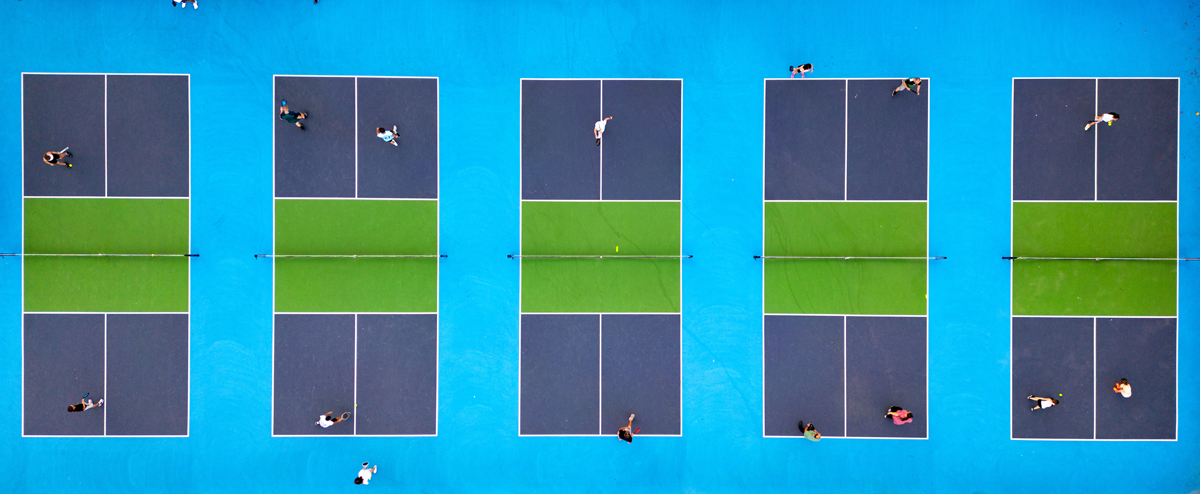
Pickleball has become one of the fastest-growing recreational sports in the U.S., attracting players of all ages. While it may seem low-impact, its rapid lateral movements, quick pivots, and repetitive paddle strokes have led to a noticeable increase in orthopaedic injuries — so much so that many practices are now seeing more pickleball-related visits than CrossFit-related ones.
Some jokingly suggest that orthopaedic surgeons should have banners at pickleball tournaments or even sponsor the courts, given how many patients are coming through with paddle-induced injuries.
Why Pickleball Leads to Injuries
- High-intensity, short bursts: Quick pivots and sudden stops put stress on knees, ankles, and hips.
- Repetitive upper-body motions: Overhead and paddle strokes can strain shoulders, elbows, and wrists.
- Sudden engagement by beginners: New players often underestimate the physical demands, leading to acute injuries.
- Older demographic: Many recreational players are middle-aged or older, increasing susceptibility to overuse injuries.
Most Common Pickleball Injuries
- Shoulder injuries – Rotator cuff tendinopathy, impingement, and strains from repetitive overhead shots.
- Elbow injuries – Lateral epicondylitis (“tennis elbow”) and medial epicondylitis (“golfer’s elbow”) from constant swinging.
- Knee injuries – Meniscus tears, ligament sprains, and patellofemoral pain from rapid lateral movements.
- Ankle injuries – Inversion sprains, Achilles tendinopathy, and plantar fasciitis.
- Back injuries – Lumbar strains from twisting or lunging for low shots.
Comparing Pickleball to CrossFit
- CrossFit injuries often involve shoulders, knees, and lower back from heavy lifting, high-intensity movements, or poor technique.
- Pickleball injuries are more overuse-related and acute from sudden pivots, lunges, and repetitive strokes.
- Many orthopaedic practices report that new patient visits for pickleball injuries now rival or exceed those from CrossFit, highlighting how a “fun, casual sport” can still be surprisingly demanding on the body.
Prevention
- Warm up and stretch before play.
- Focus on strength and conditioning, particularly for shoulders, knees, and core.
- Learn proper stroke mechanics to reduce stress on joints.
- Limit consecutive play sessions, especially for new players.
When to See a Sports Medicine–Trained Orthopaedic Surgeon
While many pickleball injuries improve with rest and home care, evaluation by a sports medicine–trained orthopaedic surgeon is important in the following situations:
- Persistent Pain or Swelling – Pain lasting more than a few days or swelling that worsens.
- Loss of Function – Difficulty bending, straightening, or bearing weight on a joint; trouble lifting, gripping, or performing daily activities.
- Instability or Locking – Knees giving out, joints locking, or shoulder/ankle instability.
- Acute Trauma – Falls, collisions, or suspected fractures, dislocations, or ligament tears.
- Recurrent Injuries – Repeated sprains, strains, or tendon issues that don’t fully heal.
- Desire for Advanced Care – Interest in imaging, guided injections, regenerative treatments (e.g., PRP), or guidance on return-to-play protocols.
Bottom Line: Early evaluation by a sports medicine–trained orthopaedic surgeon can prevent chronic problems, optimize recovery, and safely return players to the court.
About the Author
Dr. Brian Reiter, MD
Sports Medicine & Orthopaedic Surgeon
Specializing in minimally invasive joint procedures, tendon and ligament repair, and sports-related injuries. Dr. Reiter treats athletes of all levels and provides personalized care to optimize recovery and performance.