
Expert Trauma & Fracture Care When You Need It Most
A fracture or traumatic injury can disrupt your life in an instant. Atlantis Orthopaedics provides expert evaluation and fracture care for broken bones and acute injuries, with a personalized treatment plan that may include casting or splinting in-office whenever possible and surgical repair when needed to support proper healing and restore function.
- Expert trauma, fracture & orthopaedic care
- Personalized treatment plan for your injury
- Non-surgical care and surgery when appropriate
- Locations in Palm Beach Gardens & Lake Worth
- Serving Palm Beach County since 1992
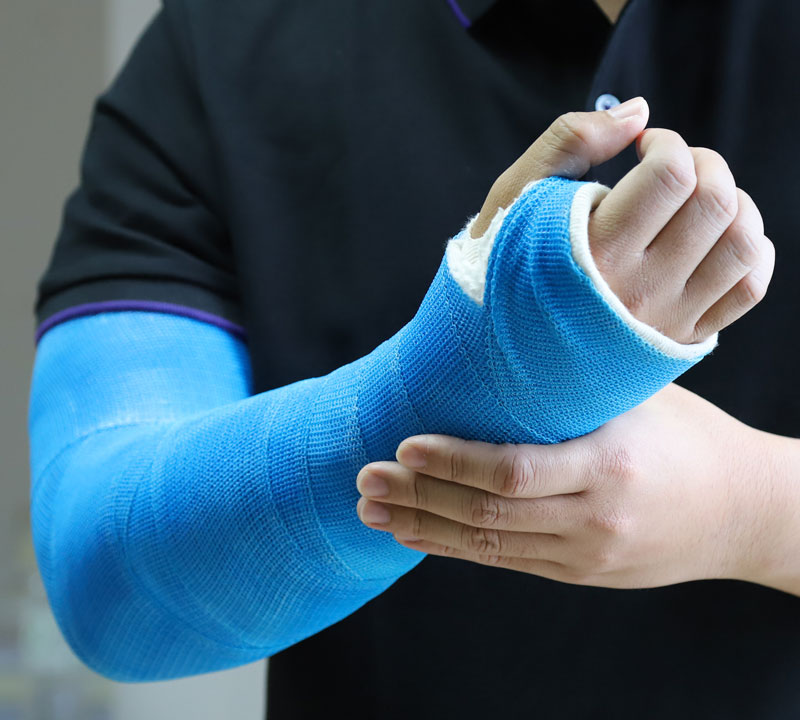
Personalized Trauma & Fracture Care
The treatment you receive at Atlantis Orthopaedics is based entirely on your individual evaluation. Our orthopaedic specialists are experienced in assessing injuries and building a care plan that fits your diagnosis, lifestyle, and recovery goals. Whether you have a straightforward break or a more complex fracture that requires reduction, many fractures can be aligned and stabilized with a cast or splint—often right in our office—to support proper healing.
Trauma & Fracture Care FAQs
Common orthopaedic trauma injuries are usually caused by falls, sports collisions, workplace accidents, or car crashes and often involve damage to bones, joints, and surrounding soft tissue. The most frequent injuries include fractures (broken bones) of the wrist, ankle, foot, hand, forearm, collarbone, hip, and leg; dislocations of joints like the shoulder, elbow, knee, or fingers; and sprains/strains involving ligaments, tendons, or muscles. More serious trauma can also include complex fractures (multiple breaks or joint-involving fractures), tendon ruptures, and injuries that cause significant swelling, bruising, instability, or difficulty bearing weight—symptoms that should be evaluated promptly.
Orthopaedic trauma treatment depends on the type of injury, the bone or joint involved, and how well everything is aligned, but the goal is always the same: restore stability, promote proper healing, and return function safely. Care often starts with an exam and imaging (like X-rays, and sometimes MRI or CT), followed by pain control and stabilizing the injury with a splint, brace, or cast. Many fractures can heal well without surgery when the bones are in good position, while displaced or unstable fractures and certain joint injuries may require reduction (realignment) and, in some cases, surgical fixation using plates, screws, rods, or pins. Rehabilitation—often including physical therapy—is typically part of recovery to rebuild strength, motion, and confidence as healing progresses.
Fractures most often happen when a bone is subjected to more force than it can handle—such as from a fall, sports collision, workplace accident, or car crash. They can also occur from repetitive stress over time (stress fractures) or from weakened bone due to conditions like osteoporosis. Diagnosis typically starts with a detailed history and physical exam to assess pain, swelling, bruising, deformity, and ability to bear weight or use the injured area. X-rays are the most common imaging test used to confirm a fracture and determine alignment; in some cases, a CT scan may be ordered for complex or joint-involving fractures, or an MRI may be used to detect stress fractures or associated ligament, tendon, or cartilage injuries.
Fracture treatment depends on which bone is broken, how far it’s moved out of place, and whether the joint or nearby soft tissue is involved, but the main goals are to realign the bone, keep it stable, and allow it to heal properly. Many fractures can be treated without surgery using a splint or cast, along with elevation, ice, and activity modification to reduce swelling and pain. If the bone is displaced, a reduction (realignment) may be needed—sometimes done in the office—before immobilization. More complex or unstable fractures may require surgery to hold the bone in the correct position using plates, screws, rods, or pins. Once healing begins, follow-up visits and imaging help track progress, and rehabilitation may be recommended to restore strength, range of motion, and function.