Total vs. Partial Knee Replacement: Tailoring the Right Solution for Joint Longevity
By Dr. Salvador Forte | Serving Palm Beach, Palm Beach Gardens & Jupiter, FL
If you’re an active adult in Palm Beach County dealing with knee pain, you’ve probably already asked the question: do I need a full knee replacement, or is there a less invasive option? It’s one of the most common — and most important — questions active patients bring to my practice, especially those who aren’t ready to slow down.
The truth is, not all knee arthritis is the same, and not all knees need the same surgery. Thanks to Mako robotic-arm assisted technology and modern muscle-sparing techniques, today’s patients have access to a level of precision and customization that simply didn’t exist a decade ago. The key is matching the right procedure to the specific pattern of damage in your knee — not defaulting to one-size-fits-all surgery.
Understanding Your Arthritis Pattern: Localized vs. Widespread
Your knee is divided into three compartments:
- Medial compartment — the inner side of the knee (the most common site of arthritis)
- Lateral compartment — the outer side of the knee
- Patellofemoral compartment — behind the kneecap
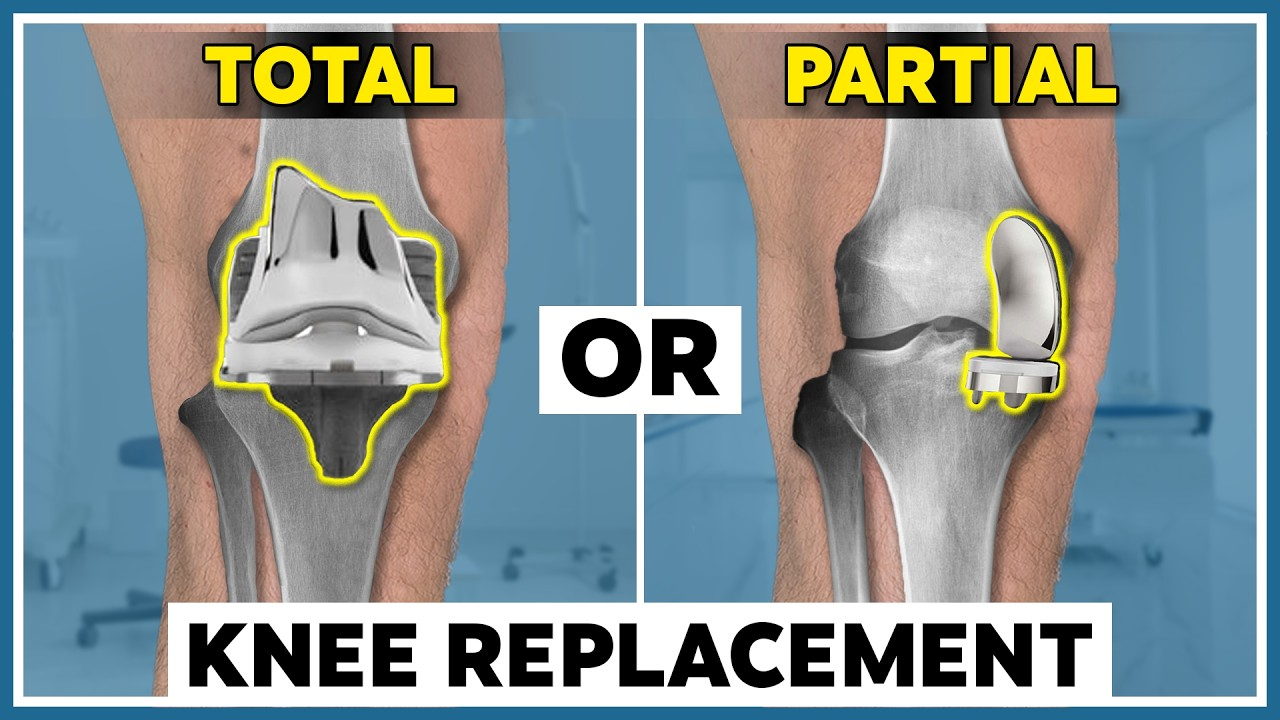
When arthritis is confined to just one of these compartments while the rest of the joint, cartilage, and ligaments remain healthy, you may be a candidate for a partial knee replacement. When arthritis has progressed across two or three compartments, a total knee replacement becomes the more reliable, longer-lasting solution.
This distinction matters enormously for active patients in the Jupiter and Palm Beach area who golf, play tennis, garden, or simply want to keep up with grandchildren without pain dictating their schedule.
Robotic Partial Knee Surgery: Resurfacing Only What’s Damaged
For patients with localized arthritis, Dr. Forte uses Mako robotic guidance to perform a partial (or “unicompartmental”) knee replacement. Here’s why this approach is gaining popularity among younger, active patients:
1. Healthy bone and ligaments are preserved. Unlike a total knee replacement, a partial knee replacement only resurfaces the damaged compartment. Your anterior cruciate ligament (ACL), posterior cruciate ligament (PCL), and the healthy cartilage in the other compartments stay intact — preserving the knee’s natural mechanics and “feel.”
2. Quadriceps muscle-sparing technique. Dr. Forte utilizes a surgical approach that works around the quadriceps muscle rather than cutting through it. This typically translates to less post-operative pain, retained quadriceps strength, and a faster return to walking without a cane or walker.
3. Mako robotic-arm precision. Before any bone is touched, a CT-based 3D model of your knee is built, allowing Dr. Forte to plan implant size, position, and alignment down to the millimeter. During surgery, the Mako system provides real-time guidance, helping ensure the implant is placed with a level of accuracy that’s difficult to achieve with manual instrumentation alone.
4. Faster recovery, more natural motion. Because less tissue is disrupted and the joint’s natural ligaments remain in place, many partial knee replacement patients report that the joint feels more like “their own knee” compared to a total replacement — an important factor for patients who want to return to higher-impact activities.
When Total Knee Replacement Is the Better Long-Term Investment
Partial knee replacement isn’t the right choice for every patient — and an honest, experienced surgeon will tell you that. If arthritis has spread across multiple compartments, attempting a partial replacement can lead to continued pain in the untreated areas and a higher likelihood of needing a second surgery down the road.
For patients with widespread arthritis, a Mako robotic-assisted total knee replacement allows Dr. Forte to:
- Resurface all three compartments with precisely planned, patient-specific alignment
- Balance ligament tension dynamically during surgery using real-time data
- Reduce the risk of implant malalignment, a leading cause of long-term knee replacement complications
- Support a same-day or rapid-recovery surgical pathway
In short: total knee replacement, when properly indicated and executed with robotic precision, offers outstanding long-term durability and pain relief — it’s simply the right tool for a different job than partial replacement.
Why “Customized” Is the Right Word for Your Arthritis Treatment
There is no universal answer to “total vs. partial.” The right answer depends on:
- Which compartments of your knee show arthritic damage (confirmed via exam and imaging)
- The condition and stability of your ACL and PCL
- Your activity level and goals — competitive athlete, weekend golfer, or simply pain-free daily living
- Your bone quality and alignment
- Your age and long-term durability needs
This is why Dr. Forte begins every knee evaluation with a detailed clinical exam and imaging review before recommending a path forward — never assuming, always customizing.
Why Active Patients Across Palm Beach, Palm Beach Gardens & Jupiter Choose Dr. Forte
Orthopedic care should combine the most advanced robotic technology available with a genuinely personalized, concierge-level patient experience. Dr. Salvador Forte has guided patients throughout Palm Beach County through both partial and total knee replacement using Mako robotic guidance and muscle-sparing surgical techniques designed to minimize downtime and maximize long-term joint performance.
If you’ve been told “you just need a knee replacement” without a clear explanation of which procedure fits your specific arthritis pattern, it may be time for a second opinion.
Ready to Find Out Which Procedure Is Right for Your Knee?
Discover whether a custom partial or total joint procedure is right for you. View Dr. Salvador Forte’s personalized orthopedic services to take your first step toward pain-free living.
Dr. Salvador Forte proudly serves patients throughout Palm Beach, Palm Beach Gardens, Jupiter, and the surrounding communities.